
Lower capital pressure
Renewable-energy infrastructure without funding the full installation upfront.
02 — Environmental
Toyota Empowerment Trust’s Renewable Energy Fund helps companies across South Africa’s automotive sector access renewable-energy infrastructure designed to lower energy costs, improve resilience and reduce emissions.
Any company operating within South Africa’s automotive sector may apply for funded solar. You do not have to be an existing Toyota supplier.
That includes:
Applying commits neither side to anything.Each site is assessed on its own energy use, roof or yard conditions and project economics, and the Fund proceeds where an installation makes sense for the business and for the Fund.
And a site that is not right for this Fund is not the end of the conversation. Where an installation does not work, TET can point the business towards other funding routes that might.
For smaller suppliers, renewable-energy infrastructure can require capital that is also needed for equipment, working capital, people and growth.
At the same time, energy cost, supply reliability and carbon performance are becoming increasingly important to industrial competitiveness.
The Renewable Energy Fund is designed to address these challenges together.

For qualifying installations, the Fund finances and owns renewable-energy infrastructure at the supplier’s site.
The supplier purchases the electricity generated under a Power Purchase Agreement rather than carrying the full installation cost upfront.
Energy use, site conditions and project feasibility are evaluated.
Commercial and site agreements are put in place.
The project is designed, installed and commissioned using specialist delivery partners.
Generation is monitored and maintained.
Energy production, savings and associated emissions outcomes are tracked.
Recovered capital and economic returns can support further installations.
Stated as the supplier’s own position rather than the Fund’s. Each of these is conditional on site economics and the terms actually agreed.
Renewable-energy infrastructure without funding the full installation upfront.
Electricity is structured to be supplied at a rate below prevailing grid tariffs, subject to site economics and agreement terms.
On-site generation reduces reliance on electricity purchased from the grid during generation hours.
Long-term contractual arrangements can provide greater predictability over energy pricing.
Renewable generation can reduce the carbon intensity associated with purchased electricity.
Centralised monitoring creates more consistent generation information that can support energy and emissions reporting.


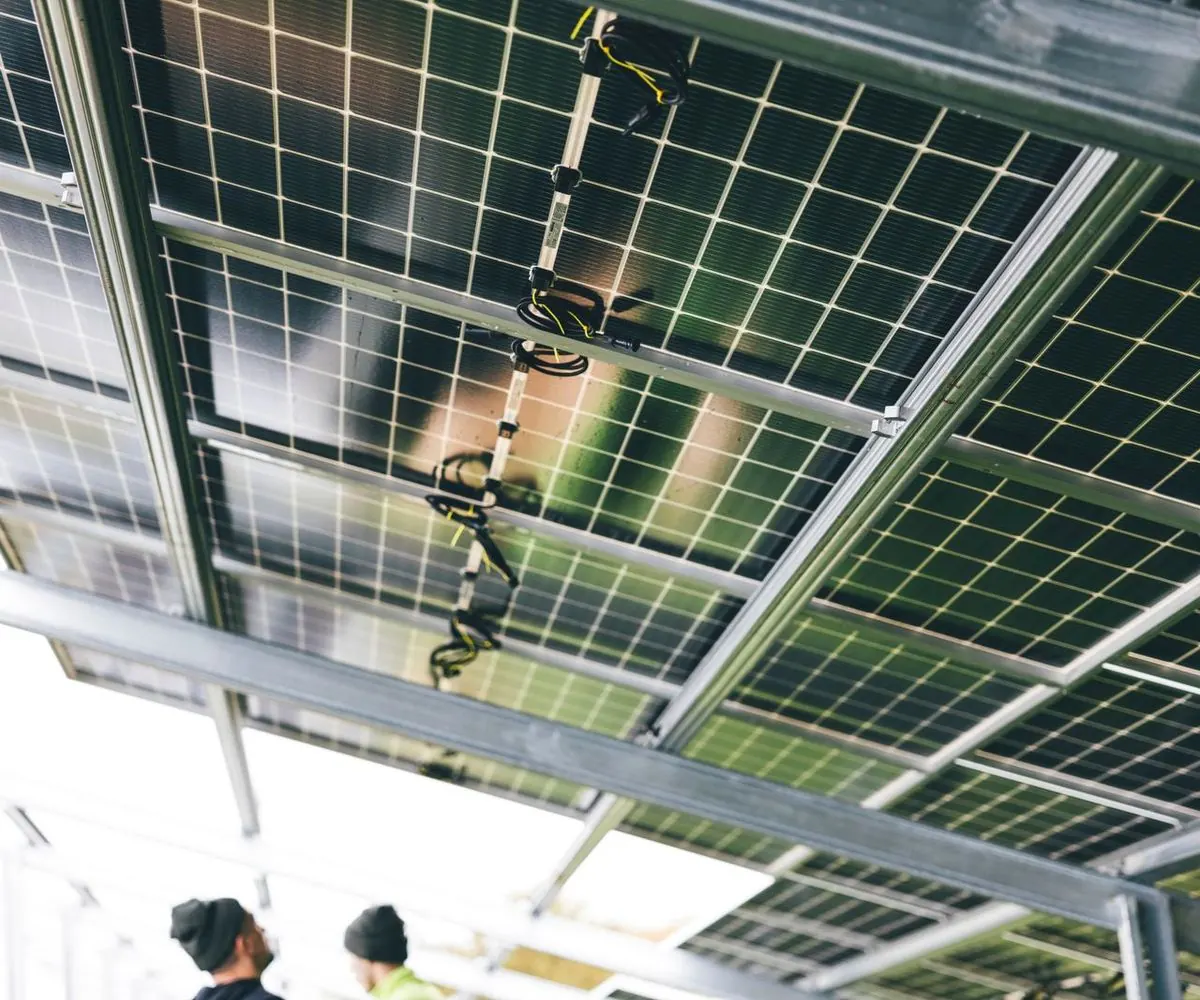
The value of the Fund is broader than installed capacity.
A supplier with lower energy costs can become more competitive.
A supplier with more resilient energy can reduce operational exposure.
A supplier with reliable energy data is better equipped to respond to customer sustainability requirements.
Energy resilience + cost competitiveness + decarbonisation + data capability
A once-off grant is spent once.
The Renewable Energy Fund is designed so that funded infrastructure can continue generating value over time.
By retaining ownership of funded assets and recovering value through the energy supplied, the model creates the potential to recycle capital into additional installations.
The intention is to build a growing supplier-decarbonisation platform rather than a sequence of unrelated projects.
Every rand recovered is a rand that can fund the next roof. That is what makes this evergreen rather than finite: the Fund is built to outlast the installations it pays for.
The Renewable Energy Fund is live. The first installation was commissioned in March 2026 and is active and generating for the site it was built on.
The next phase is disciplined scale. The Fund aims to demonstrate repeatable delivery across:
To provide reliable emissions information, a supplier needs to know:
TET’s supplier scale-up model is designed to build the underlying business maturity that makes this possible.
Carbon-compliance training and dedicated reporting tools can then be layered onto stronger management systems.